Virtual assistant · appointments & hospital info
Built by Simplifyne Technologies
Mumbai's monsoon brings relief from the summer heat, but it also brings a health problem that catches many people off guard: a sharp rise in kidney stone cases.
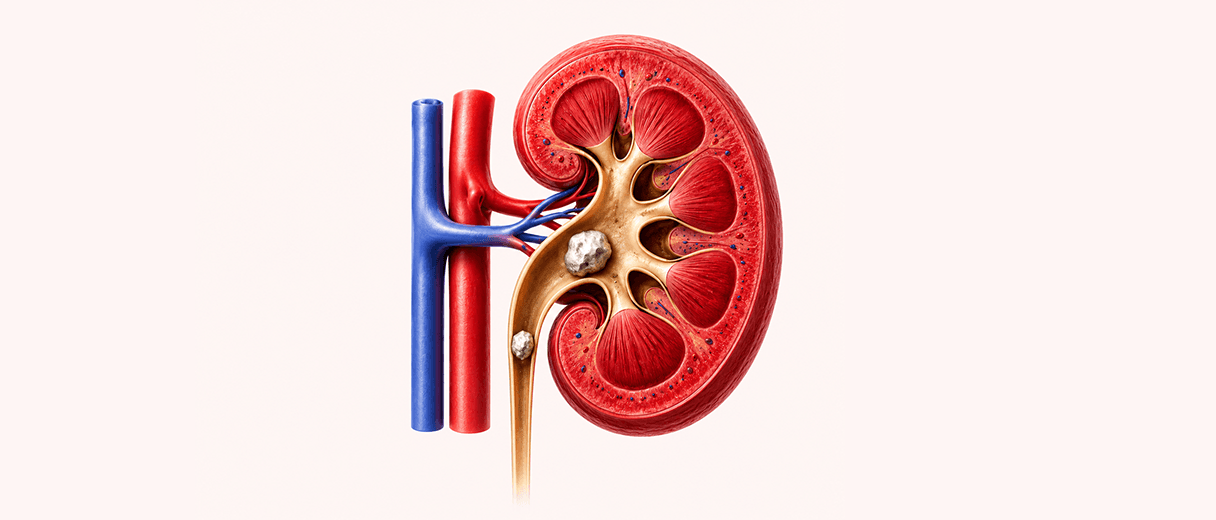
Every year, as the rains arrive, urologists across Borivali, Dahisar, Kandivali, Andheri, Jogeshwari, and Bhayandar, see more patients walking in with severe lower back pain, nausea, and blood in their urine.
The connection between monsoon weather and kidney stones is not a coincidence. It comes down to one main trigger: dehydration, combined with dietary habits that shift with the season. This post explains exactly why cases rise during this period, what symptoms to watch for, and when you need to see a doctor.
It feels counterintuitive. The weather is cooler, the air is humid, and you are not sweating the way you did in May. So why would kidney stones be more common right now?
The answer is hidden dehydration. When temperatures drop and humidity rises, most people naturally drink less water. You do not feel thirsty in the same way. But your body is still losing fluid through breath, urine, and mild perspiration. You are not replacing it at the same rate, and your urine becomes concentrated as a result.
This is the exact environment in which kidney stones form. When urine is concentrated, minerals such as calcium, oxalate, and uric acid remain in the kidneys longer than they should. They begin to crystallize and, over time, cluster into stones that can range from the size of a grain of sand to a small pebble.
Urologists across Mumbai report a consistent rise in kidney stone cases every monsoon season, with stone-related complaints making up a significant share of urology OPD visits during hot and humid weather months.
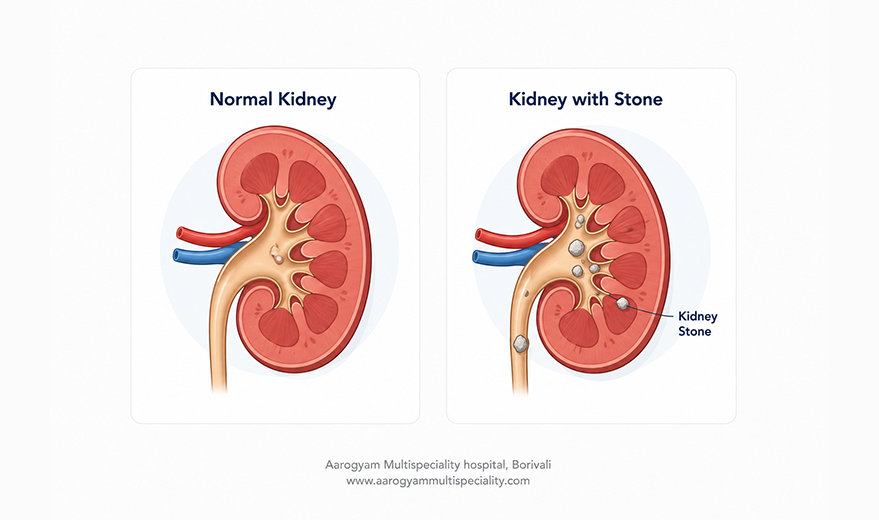
Reduced thirst, reduced water intake. Cooler weather suppresses the sensation of thirst. People who would drink 3 litres on a hot May afternoon often drink a litre or less during a rainy July evening, without realising it.
Dietary changes. Monsoon eating habits in Mumbai tend to lean toward fried, salty snacks, street food, and processed items. High sodium intake pulls calcium into the urine, which raises the risk of stone formation. Reduced consumption of fresh fruits and vegetables also removes the natural citrate that normally prevents stones from forming.
Pre-existing stone formation from summer. Many stones that appear during monsoon began forming weeks earlier, during the intense heat of April and May, when sweating was heavy and water intake was inconsistent. The monsoon season is often when those stones move, causing sudden, severe pain.
Symptom | Kidney Stone | Muscle Pain |
|---|---|---|
Sharp pain | ✓ | ✗ |
Blood in urine | ✓ | ✗ |
Fever | Possible | Rare |
Pain moves to groin | ✓ | ✗ |
If you are experiencing lower back or flank pain this monsoon, do not wait for it to pass. Book a consultation at Aarogyam Multispeciality Hospital in Borivali: book-appointment
Kidney stones are hard deposits of minerals and salts that form inside the kidneys. They develop when urine becomes too concentrated for these minerals to stay dissolved. According to a study published in the journal Urological Science (2025), approximately 12 per cent of the Indian population is prone to urinary stones, and the risk of recurrence after a first stone is high, ranging from 60 to 90 per cent.
India sits within what researchers refer to as the stone belt, a region of Asia with elevated prevalence of kidney stone disease. A hot climate, inconsistent access to clean water, and dietary habits that include high calcium, oxalate, and salt intake all contribute to this.
The most common type of kidney stone in India is calcium oxalate, formed when calcium and oxalate combine in concentrated urine. Uric acid stones are also common, particularly in people with gout, diabetes, or diets high in red meat.
Residents of Goregaon, Malad, Mira Road, and Kandivali face the same risks as those in the rest of Mumbai. Hard municipal tap water with higher mineral content, combined with the dehydration patterns described above, creates conditions where stones can form throughout the western suburbs of the city.
Kidney stones often sit in the kidney without causing any symptoms. The pain begins when a stone starts moving out of the kidney and into the ureter, the narrow tube that carries urine to the bladder. Once a stone enters the ureter, the pain can be sudden and severe.
Common symptoms include:
Sharp, intense pain in the lower back, side, or flank area, often coming in waves
Pain that radiates downward toward the lower abdomen and groin as the stone moves
Blood in the urine, which may appear pink, red, or brown
Frequent urge to urinate, often with a burning sensation
Nausea and vomiting, which occur because the kidneys share nerve pathways with the digestive system
Urine that appears cloudy or has a foul smell, which may indicate an accompanying infection
Seek emergency care immediately if you have any of the following:
Fever above 38.5°C with flank or back pain (this may signal a kidney infection)
Inability to urinate at all, or only passing a few drops
Persistent vomiting that prevents you from keeping down fluids
Unbearable pain that does not ease with rest or over-the-counter medication
A known history of kidney stones along with any of the above signs
A kidney stone combined with a fever is treated as a urological emergency. The stone may be blocking urine flow and creating conditions for bacterial infection. Delayed treatment in these cases can cause serious and sometimes permanent kidney damage.
For diagnosis, doctors typically use an ultrasound or CT scan to confirm the size and location of the stone, along with a urine test to check for blood, crystals, and infection. Blood tests assess kidney function. These tests help determine whether the stone will pass on its own or requires intervention. Our treatments page covers the full range of urology services available at Aarogyam.
Not all kidney stones require surgery. Treatment depends on the size of the stone, its location, and whether it is causing complications such as blockage or infection.
Most small stones pass through the urinary tract on their own. This process can take a few days to a few weeks. Doctors typically advise increased fluid intake (at minimum 2.5 to 3 litres of water per day), pain management with appropriate medication, and regular follow-up.
Stones larger than 5mm, or those that are blocking urine flow, often require intervention. Options include:
Extracorporeal shock wave lithotripsy (ESWL): A non-invasive procedure using sound waves to break the stone into smaller pieces that can pass through urine.
Ureteroscopy: A thin, flexible camera is passed through the urinary tract to reach and remove or break up the stone. No external incision is needed.
PCNL (Percutaneous Nephrolithotomy): A minimally invasive surgical procedure used for large or complex stones, involving a small incision in the back to access the kidney directly.
The right treatment depends on your specific situation. Our specialist doctors at Aarogyam Multispeciality Hospital in Borivali will assess your case with imaging and recommend the most appropriate approach. We accept cashless treatment under 37+ insurance providers, so getting prompt care does not have to wait for paperwork. See our insurance page for the full list of empanelled providers.
Experiencing kidney stone pain in Borivali, Dahisar, or Mira Road? Get assessed today: aarogyammultispeciality.com/book-appointment
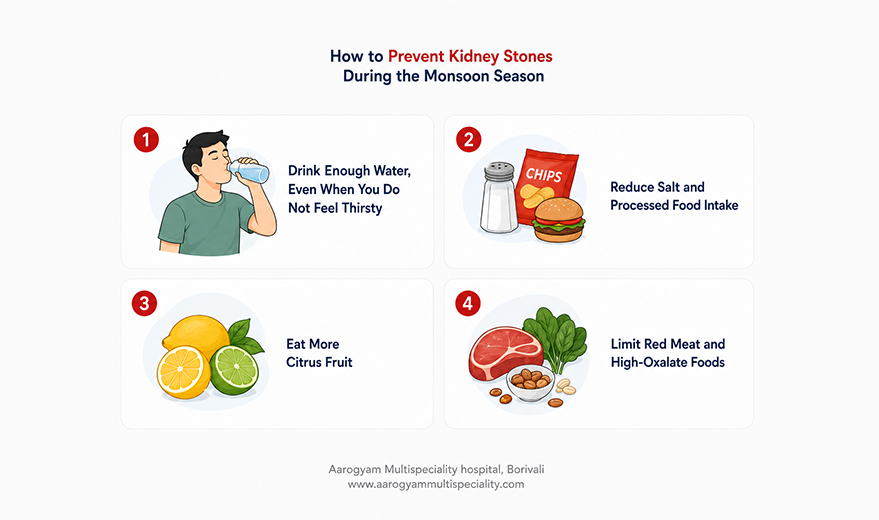
Prevention is straightforward and effective for most people. The following steps significantly reduce risk, particularly during the monsoon months when dehydration is less obvious but very real.
This is the single most important step. Aim for at least 2.5 to 3 litres of water per day. Your urine should be pale yellow. If it is dark yellow or amber, you are not drinking enough. Carry a water bottle during your commute from Kandivali or Mira Road. Set reminders if needed. Do not wait until you feel thirsty.
High sodium intake causes the kidneys to excrete more calcium into the urine, which directly raises the risk of calcium oxalate stones. During monsoon, when fried snacks and salty street food are part of daily life in most Borivali households, this is a real risk. Try to keep sodium intake moderate and read labels on packaged food.
Lemons, limes, and oranges contain citrate, a compound that naturally inhibits stone formation by binding to calcium in the urine. Squeezing half a lemon into your water once or twice a day is a simple and effective prevention habit.
Red meat raises uric acid levels, which promotes uric acid stone formation. High-oxalate foods such as spinach, nuts, and certain legumes also raise risk in people who are prone to calcium oxalate stones. Moderation, rather than total avoidance, is the practical approach for most people.
If you have had kidney stones before, you are at significantly higher risk of recurrence. If you have diabetes, gout, a family history of stones, or recurrent urinary tract infections, speak to a doctor before symptoms develop. Early metabolic assessment can identify exactly why stones are forming in your case and allow targeted prevention.
Do This | Why It Matters |
|---|---|
Drink 3 litres of water daily | Concentrated urine is where stones form |
Reduce salt and processed food | Sodium pushes calcium into the urine |
Eat lemon, lime, or orange daily | Citrate naturally blocks stone formation |
Limit red meat | Raises uric acid, a trigger for stone formation |
Stay active | Movement prevents minerals from settling in the kidneys |
Do not hold urine | Delays concentrate urine and raise crystallisation risk |
Get assessed if you have a history | Early testing prevents the next stone |
Aarogyam Multispeciality Hospital in Borivali has been serving patients from across North Mumbai for over 15 years. Formerly known as National Hospital Borivali, we bring 16 specialist departments and 33+ doctors under one roof. To see our full list of treatments or to book an appointment, visit our hospital page or call us at +91 916 777 6600.
Patients from Borivali, Kandivali, Dahisar, Malad, Goregaon, Mira Road, Bhayandar, and Andheri regularly visit Aarogyam Multispeciality Hospital for expert diagnosis and treatment of kidney stones.
Book a urology consultation at Aarogyam Multispeciality Hospital, Borivali. We serve patients from Dahisar, Kandivali, Goregaon, Malad, and Mira Road. Call +91 916 777 6600 or visit: aarogyammultispeciality.com/book-appointment
The main reason is hidden dehydration. During the monsoon, people drink less water because they do not feel as thirsty in cooler, humid weather. However, the body continues to lose fluid, and urine becomes concentrated. Concentrated urine allows minerals like calcium and oxalate to crystallise and form stones. Dietary changes during the monsoon, such as eating more salty fried foods and fewer fresh fruits, also raise the risk.
Many small kidney stones, generally those under 5mm in diameter, pass through the urinary tract on their own with adequate hydration and pain management. Larger stones or those causing a blockage, infection, or persistent pain usually need medical intervention such as ureteroscopy, ESWL, or surgery. A doctor can assess the stone size and location through ultrasound or CT scan and advise accordingly.
Doctors generally recommend a minimum of 2.5 to 3 litres of water per day. Your urine should remain pale yellow throughout the day. If it darkens, especially after spending time outdoors during your commute or at work in Borivali or Dahisar, increase your water intake. Lemon water is a particularly useful addition, as citrate in lemon juice helps prevent stone formation.
You should seek emergency care immediately if you have a high fever along with kidney stone pain, if you are unable to urinate, if you are vomiting persistently, or if the pain is unbearable and uncontrolled. These symptoms may indicate that the stone has caused a blockage combined with an infection, which is a medical emergency that requires prompt treatment to protect kidney function.
Yes, unfortunately. Research suggests that the recurrence rate for kidney stones is high. If you have had a stone before, you are at higher risk of forming another one, particularly during high-risk periods like the Mumbai monsoon. It is worth discussing a preventive plan with a urologist, which may include a 24-hour urine analysis, dietary adjustments, and in some cases, medication to reduce the specific minerals responsible for your stone type.
Book a consultation with our experienced urologists at Aarogyam Multispeciality Hospital, Borivali. Same-day appointments and cashless insurance options are available.
