Virtual assistant · appointments & hospital info
Built by Simplifyne Technologies
Every monsoon, dengue spreads rapidly across Mumbai, and North Mumbai neighbourhoods, including Borivali, Dahisar, Kandivali, and Mira Road, are not spared. Knowing how to recognise dengue early, and knowing when home rest is enough versus when you need a doctor urgently, can make a real difference
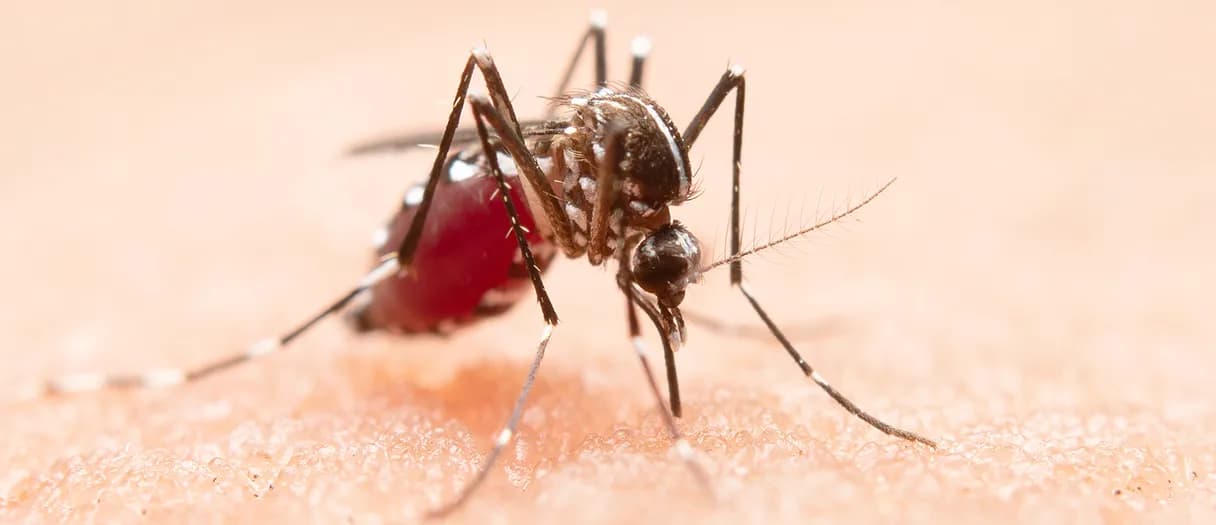
Dengue is a viral infection transmitted through the bite of the Aedes aegypti mosquito. This mosquito breeds in clean, stagnant water, including overhead tanks, flower pots, cooler trays, and water collected in construction sites. Mumbai's monsoon months, June through September, create ideal conditions for breeding because of heavy rainfall and waterlogging. High population density, ongoing construction activity, and water storage in containers all contribute to Mumbai's recurring dengue outbreaks each monsoon season. [Source: PMC / NCBI]
Between January and July 2025, dengue cases in Mumbai rose to 1,160 from 966 during the same period the previous year, with the BMC attributing the spike to intermittent rains causing widespread water stagnation. [Source: The Logical Indian, BMC data, August 2025]
Dengue does not always announce itself clearly. Many families in Mumbai initially mistake it for a bad flu or a viral cold. The key is knowing what combination of symptoms together should prompt a dengue test.
Dengue typically begins with a sudden, high fever and is usually accompanied by severe headache, pain behind the eyes, generalised body pain, muscle and joint ache, and flushing of the face. [Source: PAHO/WHO]
A skin rash may also appear a few days after the fever starts, and patients often experience nausea, vomiting, and swollen glands. [Source: ASM.org, August 2024]
In short, the classic early signs are:
1. Sudden high fever, often 102 to 104 degrees Fahrenheit
2. Severe headache, especially behind the eyes
3. Muscle and joint pain, sometimes called breakbone fever
4. Nausea or vomiting
5. Skin rash, usually appearing on day 3 or 4
6. Fatigue and loss of appetite
The fever phase typically lasts 2 to 7 days. During this stage, most patients can be managed at home with rest, adequate fluids, and paracetamol. Aspirin and ibuprofen should be avoided as they can increase bleeding risk in dengue.
If you or a family member in Borivali or Mira Road is showing these signs during monsoon season, do not wait to confirm the diagnosis. Visit a doctor and ask for a dengue NS1 antigen test, which is most reliable in the first 5 days of fever.
You can see our general physicians and internal medicine specialists at Aarogyam Multispeciality Hospital for a same-day consultation and blood test referral.
Need a dengue test or fever consultation? Book an appointment at Aarogyam, Borivali
This is the most critical section of this post. Dengue has three stages: fever, critical, and recovery. The critical phase often begins just as the fever starts to drop, usually around day 4 or 5. This is when patients and families are most likely to be caught off guard.
The critical stage often starts after the fever has gone away, and it is preceded by warning signs that include intense abdominal pain, persistent vomiting, bleeding gums, fluid accumulation, lethargy or restlessness, and liver enlargement. [Source: WHO Disease Outbreak News, 2024]
Other warning signs include mucosal bleeding, altered consciousness, and a rapid increase in the haematocrit level (a sign of plasma leakage into body tissues). [Source: PAHO/WHO]
If you or someone in your family develops any of the following, go to a hospital immediately. Do not wait until morning.
Go to the hospital right away if you notice:
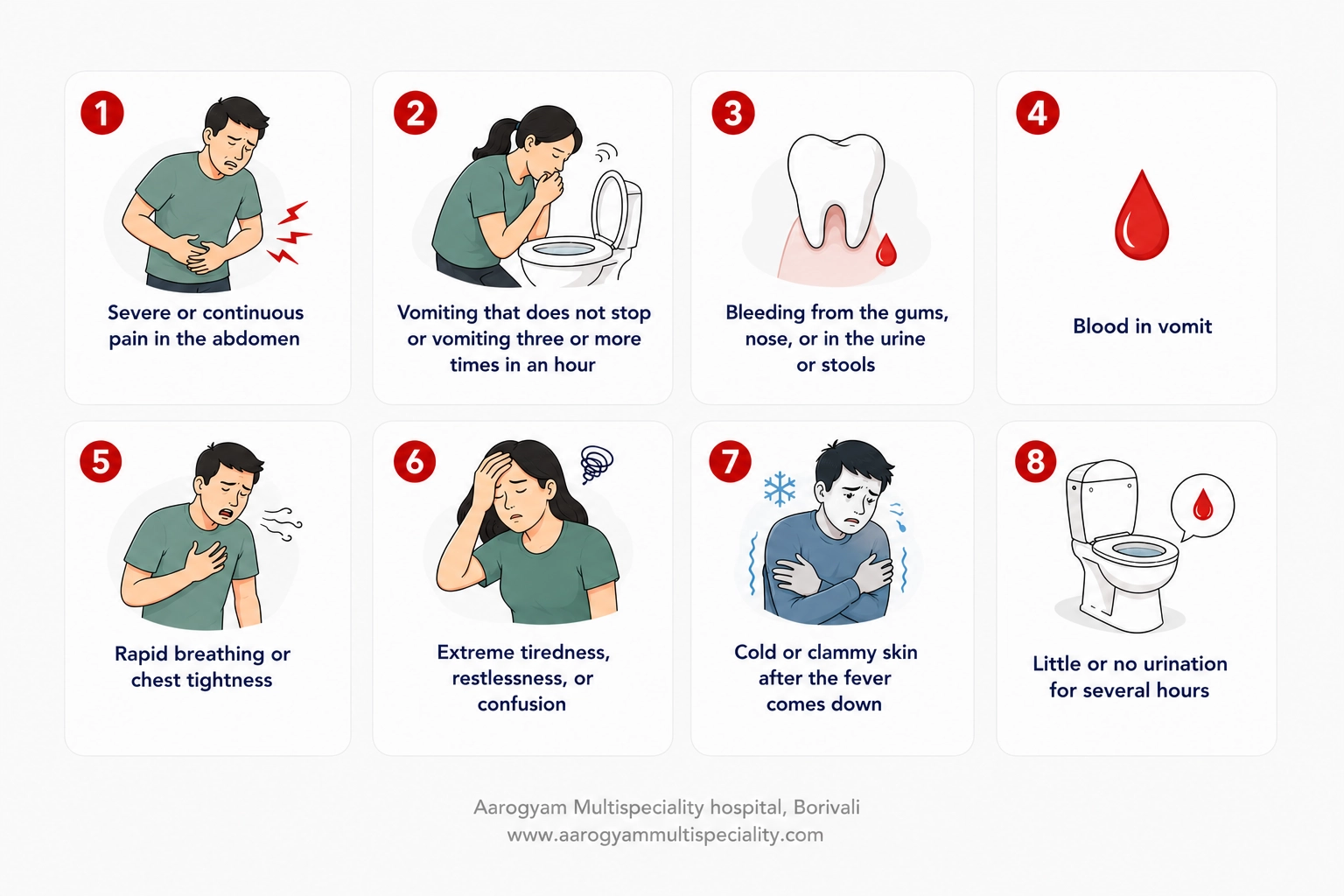
The fever coming down does not mean the patient is recovering. For dengue, it may mean the critical phase is beginning.
Aarogyam Multispeciality Hospital in Borivali has emergency facilities and specialist doctors available for dengue management. If anyone in your family is showing these signs, call us at +91 916 777 6600 or book an appointment here.
Severe dengue is defined by one or more of the following: shock from plasma leakage with fluid accumulation and respiratory distress, profuse bleeding considered clinically significant by the treating doctor, or severe organ involvement. [Source: PAHO/WHO]
Severe dengue is relatively uncommon, but it is a medical emergency when it occurs. In less than 1% of individuals, severe dengue symptoms such as clinical fluid build-up, shock, and multiple organ dysfunction can be life-threatening if not treated promptly. [Source: KIMS Study, PMC/NCBI, 2024]
This is why the warning signs listed above matter so much. Catching dengue at the warning-sign stage, before it progresses to severe dengue, is what saves lives and avoids ICU admissions.
At Aarogyam, our internal medicine team monitors platelet counts, haematocrit levels, and hydration status closely for dengue patients. To understand our dengue and fever treatment approach, visit our treatments page.
There is no specific antiviral drug for dengue. Timely diagnosis, identification of warning signs, and appropriate clinical management are key elements of care to prevent progression to severe dengue. [Source: WHO Disease Outbreak News, 2024]
What dengue treatment actually involves:
Blood tests: The NS1 antigen test is used in the first 5 days. After day 5, IgM and IgG antibody tests are used. A full blood count is monitored to track platelet count and haematocrit.
Fluid management: Adequate oral fluids are the cornerstone of home management. In hospital, IV fluids are given when the patient cannot keep fluids down or when haematocrit is rising.
Platelet transfusions: Only given in specific cases of severe bleeding or if platelet counts drop dangerously low. This is not routine.
Monitoring: The most important part of hospital care is close monitoring during the critical phase. This is why patients with warning signs must be admitted rather than treated at home.
Patients with dengue in Borivali and Dahisar can visit Aarogyam Multispeciality Hospital for diagnosis, monitoring, and treatment under our internal medicine specialists. We also support cashless admission under 37+ insurance providers. Check if your insurer is covered here.
For dengue management or fever workup in Borivali: Book at aarogyammultispeciality.com/book-appointment
Prevention in a city like Mumbai takes effort, but it is achievable at the household level.
• Empty and scrub cooler trays before refilling
• Cover overhead tanks and water storage containers tightly
• Clear clogged drains and gutters before monsoon
• Remove water from plant pot trays, old tyres, and buckets
• Use mosquito nets, especially for children and elderly family members
• Apply mosquito repellent when going outdoors in the morning and evening
• Wear full-sleeved clothing during peak mosquito hours, which are early morning and late evening
• Use electric mosquito repellents or coils at night in the bedroom
The Aedes aegypti mosquito bites primarily during the day, unlike the malaria mosquito, which bites at night. Daytime repellent use is important, particularly for children in Malad, Goregaon, and Kandivali who spend time outdoors.
If a family member has had dengue once, they can get it again from a different serotype of the virus. Repeat infections carry a higher risk of severe dengue. Take prevention seriously regardless of previous dengue history.
1. How soon after a mosquito bite do dengue symptoms appear?
The incubation period for dengue is typically 4 to 14 days after an infected mosquito bite. Most people develop symptoms within 4 to 7 days.
2. Is dengue contagious from person to person?
No. Dengue does not spread through touch, breathing, or contact with an infected person. It spreads only through the bite of an infected Aedes mosquito. However, if a mosquito bites an infected person and then bites someone else in your home, the disease can spread within a household this way.
3. When should I take my child to hospital for dengue?
Take your child to hospital immediately if they have fever for more than 2 days, show any warning signs listed above (especially severe abdominal pain, vomiting that does not stop, bleeding, or confusion), or if the child is refusing fluids entirely. Children can deteriorate faster than adults. Do not wait for the platelet count to drop before seeking help.
4. Can dengue be managed at home, or does it always need hospitalisation?
Many cases of dengue without warning signs can be managed at home with rest, oral fluids, and paracetamol. However, any patient with warning signs must be seen by a doctor and likely admitted. A daily blood count from around day 3 of fever is important to monitor platelet levels and haematocrit. If you are in Borivali or nearby areas, visit Aarogyam for a fever consultation and we will guide you on whether home management is appropriate.
5. What is the difference between dengue and malaria in terms of symptoms?
Both cause fever, chills, and body ache, and both are mosquito-borne. Malaria fever often comes in cycles (every 48 to 72 hours) and is associated with severe shivering. Dengue is more likely to cause eye pain, rash, and bleeding signs. A blood test is needed to confirm either diagnosis. During Mumbai's monsoon, both are circulating simultaneously, so self-diagnosis is unreliable.
Aarogyam Multispeciality Hospital is located in Borivali, Mumbai, with specialists across 16 departments available for fever, dengue management, and general medicine.
Book an appointment: aarogyammultispeciality.com/book-appointment
Call: +91 916 777 6600
WhatsApp: +91 809 780 9716
